How Much Light Do You Need per Tatami Mat? The Basics of Lumens, Room Size, and Lighting Design
Lighting is not just about having enough light; it defines the character of a space.
When choosing lighting, many people wonder, “How bright does it need to be?”
Even if you love the design and materials, the impression of the space can change dramatically if it turns out too dark or too bright once installed.
So this time, we’ll introduce the basics of choosing lighting: the recommended brightness per tatami mat.
However, brightness is not determined by numbers alone.
How it feels can vary greatly depending on the size of the room, its use, the colors of the walls and floor, the position of the lights, and how the light spreads.
At CTSH LIGHT., we recommend lighting plans that provide the necessary brightness while creating pleasant shadows in the space.

What is “Lumen,” the Unit of Brightness?
When considering the brightness of lighting, “lumens (lm)” is a useful unit.
Lumens measure the amount of light emitted by a light fixture or light bulb.
The higher the number, the greater the amount of light and the brighter it will feel.
In the past, it was common to judge brightness by wattage, such as “60W bulb” or “100W bulb.”
However, now that LED bulbs are mainstream, bulbs with the same wattage can have different brightness levels, so it is important to check the lumens.
When choosing lighting, knowing “how many lumens are needed for a space of a certain size” can help prevent mistakes.
The Recommended Brightness per Tatami Mat is About 300–400 Lumens
For general living spaces, a good guideline is about 300–400 lumens per tatami mat.
For example, in a 6-tatami room,
6 tatami mats × 300–400 lumens = approximately 1,800–2,400 lumens
is one guideline.
For an 8-tatami room,
8 tatami mats × 300–400 lumens = approximately 2,400–3,200 lumens
is a good guideline.
However, this is just a basic guideline for overall room lighting.
In areas for reading or working, it may be more comfortable to add a task light or spotlight.
Recommended Brightness by Room Size
Here are some rough guidelines for lighting an entire room:
4.5 tatami: approximately 1,350–1,800 lumens
6 tatami: approximately 1,800–2,400 lumens
8 tatami: approximately 2,400–3,200 lumens
10 tatami: approximately 3,000–4,000 lumens
12 tatami: approximately 3,600–4,800 lumens
If you prefer brighter lighting or have dark walls and floors, choosing a slightly higher lumen count is a safe choice.
On the other hand, a slightly lower brightness level creates a more relaxing atmosphere in bedrooms and spaces intended for unwinding.
What matters is not only “how many lumens are needed for the number of tatami mats,” but also “how you want to spend your time in that space.”

The Required Brightness Varies Depending on the Space
Even in the same 6-tatami space, the appropriate brightness varies depending on its use.
In a living room, soft, moderately bright light feels comfortable for relaxing and spending time together.
In a dining room, it is important for food to look appealing and for natural light to reach the table.
In the kitchen, you need enough brightness to see your work clearly.
In a bedroom, a calm brightness level that does not disrupt time before sleep is ideal.
In other words, lighting is not simply about making the entire room evenly bright.
The overall brightness of the space.
The brightness needed at your work area.
The darkness you want to preserve for relaxing.
By considering the balance between these three, you can create a more comfortable lighting plan.
Spaces That Are Too Bright Can Feel Unsettling
When choosing lighting, you may feel tempted to choose something bright to ensure the space does not become too dark.
Of course, providing the necessary brightness is important.
However, if the entire space is too evenly bright, shadows may disappear, making the space look flat and lacking depth.
Especially in spaces where relaxation and atmosphere are important, such as living rooms, bedrooms, and dining rooms, we recommend slightly reducing the overall brightness and adding light only where it is needed.
Areas of light and areas of soft shadow.
This contrast creates depth in the space.
At CTSH LIGHT., we focus not just on increasing brightness, but on creating a proper balance between light and shadow.
The “Multiple Lights per Room” Approach Rather Than “One Light per Room”
Trying to light an entire room with a single light fixture inevitably requires a very strong light.
As a result, the light may feel harsh, or the space may look flat.
This is why we recommend the “multiple lights per room” approach.
Rather than relying solely on ceiling lights, you can use pendant lights, wall brackets, floor lamps, and spotlights in combination to deliver the right amount of light to the right places.
For example, a pendant light over the dining table.
A floor lamp next to the sofa.
A wall bracket on the wall.
Supplementary lighting to illuminate the work area in the kitchen.
By distributing the light in this way, you can maintain the overall brightness of the room while creating a relaxing atmosphere.

The Color of the Bulb Also Affects How Bright the Light Feels
Even with the same lumen count, the color of the bulb changes how bright the light feels.
Whiter light, such as daylight white, feels crisp and bright and is well suited for workspaces.
Warmer light, such as warm white, creates a soft, relaxing impression and is well suited for living rooms, dining rooms, and bedrooms.
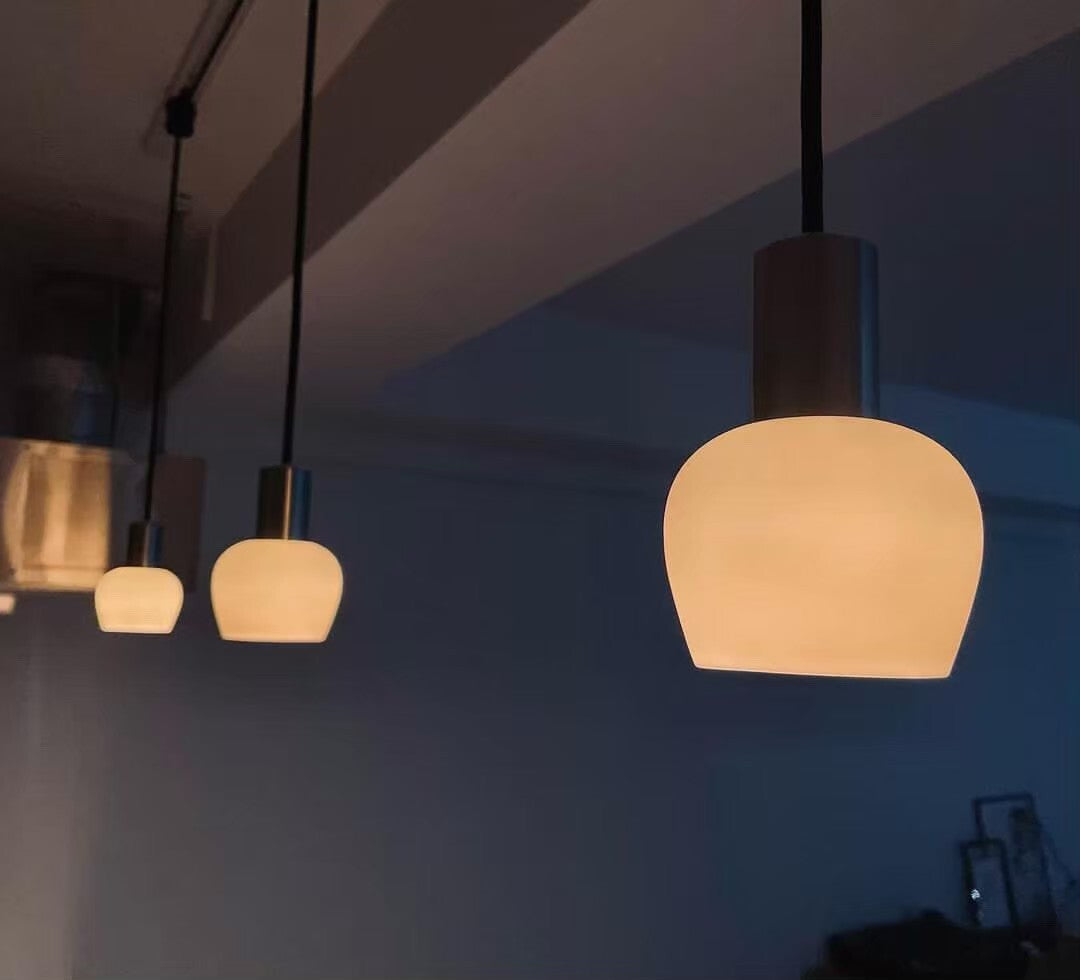
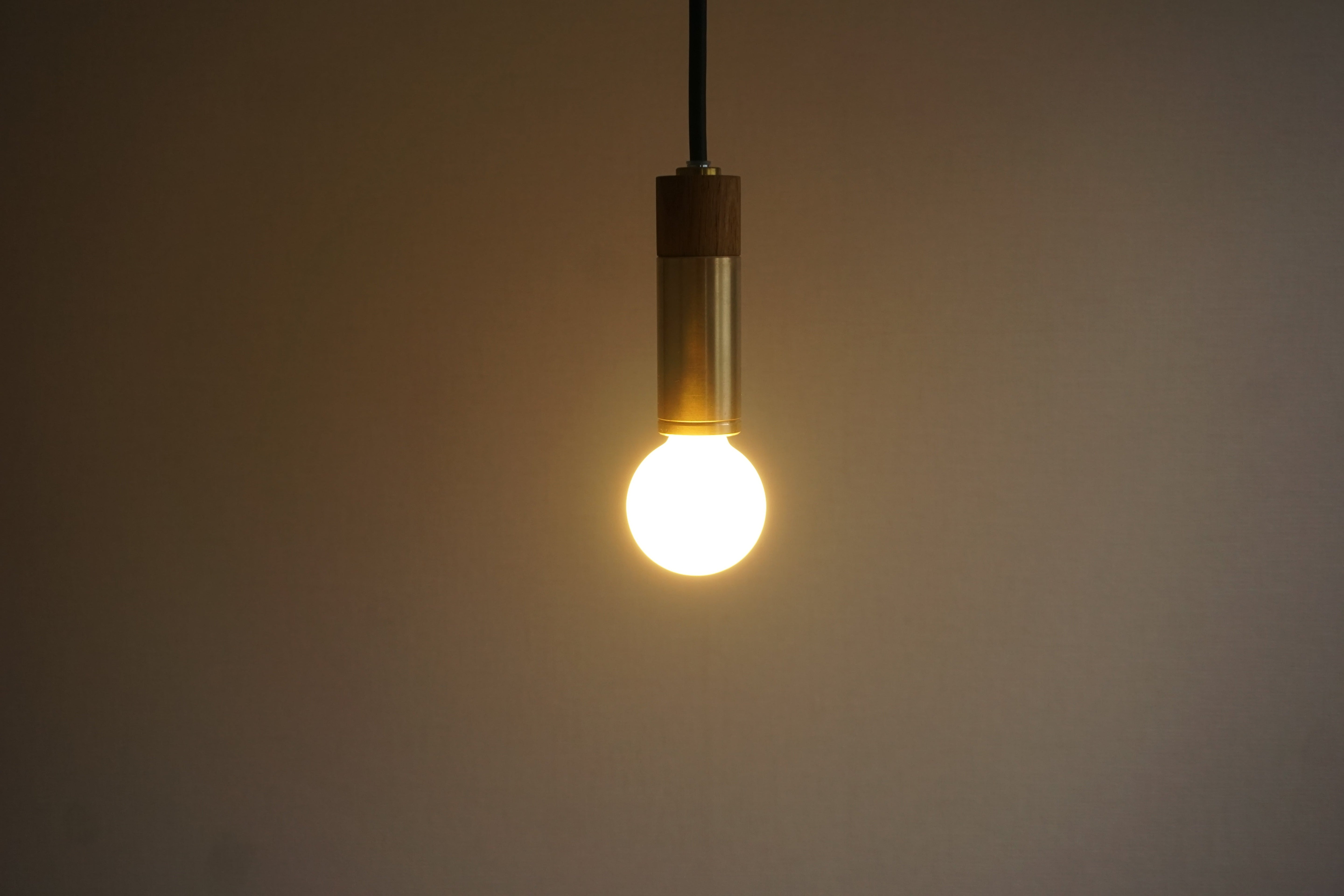
Pairing CTSH LIGHT.’s brass and white porcelain fixtures with warm white bulbs brings out the character of the materials even more richly.
The shadows cast by the metal.
The soft light passing through the white porcelain.
The gradient of light spreading across the walls and ceiling.
Even with the same brightness, the color of the light can dramatically change the character of the space.
How CTSH LIGHT. Recommends Choosing Brightness
At CTSH LIGHT., we view lighting not simply as a tool for providing brightness, but as a way to shape the impression of a space.
How many lumens are enough?
Where do you want to add brightness?
Where do you want to leave shadows?
How do you want to spend your time there?
Choosing lighting with these questions in mind reveals a sense of comfort that numbers alone cannot capture.
Brightness is not just about having enough light.
Some spaces are more relaxing because they are slightly darker.
Some spaces make it easier to focus because only the work area is bright.
And shadows cast on the wall can give a space a sense of depth.
When choosing lighting, it is important to use the number of tatami mats and lumens as a guideline while also considering the quality of time you want to spend in the room.
How to Choose Lighting Depending on Whether You Have Downlights
When considering the brightness per tatami mat, another important factor to check is whether you have downlights.
The way you choose lighting differs depending on whether the space already has downlights or relies solely on pendant lights and wall brackets for brightness.
When downlights are present, the overall brightness of the room is often already partially provided.
This makes CTSH LIGHT.’s pendant lights and wall brackets easier to incorporate not just for overall room lighting, but also for illuminating the table, creating shadows on the walls, and highlighting the character of the materials.
If there are no downlights, it is important to plan the necessary brightness by combining pendant lights, ceiling lights, and wall brackets.
Trying to light an entire room with a single light may make the bulb feel too bright and harsh, or make the atmosphere of the space feel monotonous.
In this case, rather than relying on a single strong light, we recommend the “multiple lights per room” approach, where several lights are placed throughout the space.
A pendant light over the dining table.
A wall bracket on the wall.
Supplementary lighting to illuminate the work area or feet as needed.
By distributing the light in this way, you can provide the necessary brightness while creating depth and a relaxing atmosphere in the space.
Downlights are ideal for providing even brightness throughout a space.
Pendant lights and wall brackets, on the other hand, can add character to a space by creating light and shadow in different ways.
What kind of light should you add to the existing brightness?
How should you make up for any missing brightness?
Choosing lighting with this perspective makes it easier to create a lighting plan that suits the comfort of your daily life, not just the numbers.

Key Points to Remember!
Recommended brightness per tatami mat:
For general living spaces, a good guideline is about 300–400 lumens per tatami mat.
Considerations for different areas:
Brighter for working areas and slightly softer for relaxing areas. The required brightness varies depending on how the room is used.
Enjoying CTSH LIGHT.:
By providing the necessary brightness while creating a proper balance between light and shadow, you can add depth and comfort to the space.
Downlights:
A single downlight can illuminate a wide area. Whether or not you have downlights significantly changes the lighting plan.
CTSH Recommendations