How Sharp Should Metal Edges Be?
A boundary that reflects light and welcomes your touch.
Thank you for always choosing CTSH LIGHT.
This time, we would like to introduce the "edges" of CTSH LIGHT. products.
When choosing lighting, it is easy to focus on materials, colors, and shapes.
However, the details that truly define the impression of a product may be much smaller.
One such detail is the edge of the metal.
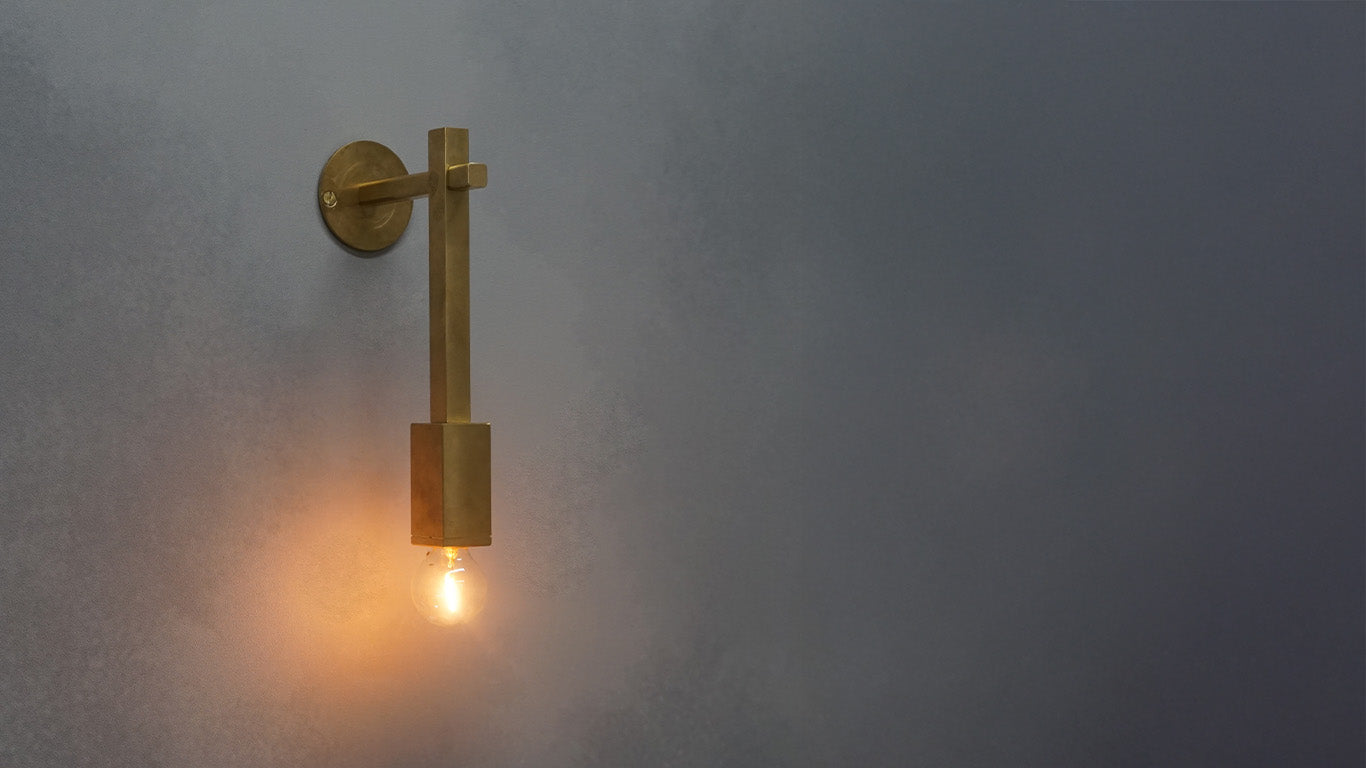
The sharp appearance unique to machining is essential to the "SQUARE" and "HEXAGON" designs, which have been staples of CTSH since the brand's inception.
At first glance, the contours appear sharp.
Yet, the edges are finished so they do not feel unpleasant to the touch.
This subtle boundary reflects CTSH LIGHT.'s approach to craftsmanship.

Edges That Define Shapes as Lines
One of the appeals of machining is the ability to clearly define contours.
If metal edges are rounded too much, the impression of the shape becomes softer.
While this has its own charm, it can make geometric shapes like SQUARE and HEXAGON appear blurred.
Squares should look like squares.
Hexagons should look like hexagons.
Straight lines should look beautiful as straight lines.
To achieve this, the definition of the edges is very important.
When light hits an edge, it creates a reflection that runs like a thin line.
This reflection makes the contour of the shape stand out clearly.
The dignified impression created when placed in a space is the result of these carefully considered details.
The Chamfering Process That Softens Edges
In metalworking, rather than leaving edges as they are, there is a process called "chamfering" to soften them as needed.
Chamfering serves both to refine the appearance and to ensure safety and comfort when touched.
However, if the chamfer is too large, it weakens the sharp impression of the design.
Conversely, if the chamfer is insufficient, the edges may still feel sharp and unpleasant to the touch.
In other words, edges should not simply be rounded.
They must retain their sharp appearance.
They must also feel gentle to the touch.
The goal is to find the balance between the two.
The Deliberately Exposed "C-Face"
In chamfering, the angled surface created by cutting away the edge is called a "C-face."
By deliberately making the C-face prominent, light hits the surface, allowing it to function beautifully as a reflective area.
Rather than hiding the edge itself, it is showcased as part of the design.
This creates another surface on the metal, adding another dimension to the way it interacts with light.
For example, in angular shapes like polyhedrons, the C-face causes light reflections to change subtly.
The way it shines changes depending on the viewing angle, highlighting the three-dimensional quality unique to machining.
Rather than simply shaping the metal, we consider where to create surfaces that catch the light.
This thoughtful approach gives the metal a richer character.
"Thread Chamfering": Sharp to the Eye, Gentle to the Touch
On the other hand, CTSH LIGHT. products sometimes feature edges that are softened so subtly they are barely noticeable.
This is "thread chamfering."
Thread chamfering is an extremely fine chamfer that makes the edges appear sharply defined while ensuring they do not feel painful or catch on the skin when touched.
It retains a sharp appearance while feeling gentle against the fingertips.
This treatment balances the tension of the metal with the ease of use of a tool.
CTSH LIGHT. fixtures are not something you touch every day.
Even so, the finish of the edges is clearly felt when installing, cleaning, or occasionally picking up the fixture.
Sharp, yet not cold.
Appearing sharp, yet feeling comfortable to the touch.
This texture is created through meticulous chamfering.
Neither Too Much Nor Too Little Machining
Finishing the edges is a very delicate process.
If machined too much, visual sharpness is lost.
The contours become blurred, and the geometric beauty of SQUARE and HEXAGON is weakened.
Conversely, if machining is insufficient, the edges will still feel unpleasant to the touch.
The sharpness of the metal remains, making the fixture feel slightly too intense for everyday use.
This is why the edges must be carefully considered.
How sharp should they be?
Where should they be softened?
How much light should they reflect?
How gentle should they feel against the fingertips?
The craftsmanship of CTSH LIGHT. lies in these subtle adjustments.
The Character of the Edges Changes with the Material
Even with the same shape, the appearance of the edges changes depending on the material.
Brass reflects warm light and develops a soft luster on its edges.
Stainless steel creates a hard, clean reflection.
Copper adds depth to the edges along with its characteristic color.
Aluminum is a material that easily conveys a light and sharp impression.
Each material differs in hardness, ductility, and the way it reflects light.
Therefore, the same edge treatment cannot be applied to every material.
Edges that make each material look its best.
Edges that feel comfortable to the touch.
Edges that create clearly defined contours when they catch the light.
It is important to refine the character of the edges to suit each material.

The Craftsmanship of CTSH LIGHT. Embodied in the "Edges"
The edges of the metal are very small details.
Yet, the overall impression of the product can reside in these small details.
When the edges are beautifully defined, the shape appears dignified.
When carefully chamfered, the edges feel reassuring to the touch.
When light hits the edges, the machined contours quietly emerge.
CTSH LIGHT. values the balance between beauty and usability.
Appearing sharp.
Yet welcoming to the touch.
Possessing the precision of an industrial product while blending into everyday life.
We approach the edges of metal while exploring this boundary.
When you hold a CTSH LIGHT. product, please take a moment to look closely at its edges.
The thin contours that emerge in the light and the smoothness felt by your fingertips.
They bear the beauty unique to machined lighting.
Key Points!
The Role of the Edges:
Metal edges beautifully define the shape and create a dignified impression in a space.
What is a C-face:
A surface created by cutting away the edge at an angle. By deliberately exposing it, a reflective surface is created that highlights the three-dimensional quality of the metal.
What is thread chamfering:
A fine chamfer that retains a sharp appearance while reducing pain or catching on the skin when touched.
The Appeal of CTSH LIGHT.:
The sharp contours of machining and the gentle feel against the fingertips. The craftsmanship of CTSH LIGHT. is reflected in the edge treatment that brings both together.
Recommended by CTSH
SQUARE and HEXAGON, distinguished by their edges, have been staples since the brand's inception. They are available in a variety of materials and finishes.